Building a Data Protection and Recovery Plan: 7 Steps to Resilience
Saiba mais sobre a Commvault e como podemos ajudá-lo a criar sua estratégia de resposta a ransomware agora mesmo! Fale com um representante agora mesmo!

A data protection and recovery plan defines how an organization backs up, protects, restores, and validates access to critical data after disruption. It typically includes recovery objectives, backup policies, roles, testing procedures, and response steps for incidents such as outages, data loss, cyberattacks, or system failures.
Organizations have never had more data to protect — or more ways to lose access to it.
As businesses expand across hybrid cloud environments, SaaS applications, containers, and edge infrastructure, data protection has become significantly more complex. At the same time, ransomware attacks, system outages, human error, and data corruption continue to threaten business operations. While many organizations invest heavily in backup technologies, backups alone do not guarantee recovery. The real challenge is ensuring critical systems and data can be restored quickly and cleanly when disruption occurs.
What Is Recovery Readiness?
Recovery readiness is an organization’s ability to restore critical data, applications, and business operations within predefined recoveryobjetivosafter a disruption. While backups are an important part of resilience, recovery readiness focuses on whether systems canactually berecovered quickly, accurately, and at scale when needed.
A recovery-ready organization understands not only what data is protected, but also how systems will be restored, in what order workloads will be recovered, and whether recovery processes have beenvalidadothrough testing.
Two key metrics shape recovery planning:
- Recovery Point Objective (RPO):Omaximumamount of data loss an organization can tolerate, measured in time. For example, an RPO of one hour means backups and replication strategies must ensure no more than one hour of data is lost during recovery.
- Recovery Time Objective (RTO):The maximum acceptable downtime before a workload or service must be restored. A critical customer-facing application may require an RTO of minutes, while less critical systems may tolerate several hours of downtime.
Essesobjetivos podedirectly influence backup frequency, infrastructure investments, replication strategies, and recovery procedures. Workloads with aggressive RPO and RTO requirements often require technologies such as continuous data protection, automated failover, immutable backups, and dedicated recovery environments.
Recuperaçãoprontidãodeveriamalsoexigirregular validation. Organizations should routinely test recovery workflows, verify workload dependencies, assess recovery performance against RPO and RTO targets, and confirm that clean recovery pointspermaneceravailableno caso deransomware, data corruption, or infrastructure failures.
How to Build a Data Protection and Recovery Plan
An effective data protection and recovery plan goes beyond creating backups. Organizations need a structured framework that protects critical data, reduces cyber risk, and helps recover business operations when disruptions occur.
1. Identify and Prioritize Critical Data and Workloads
Start by inventorying the applications, databases, cloud services, and infrastructure that support business operations. Classify data based on business value, sensitivity, regulatory requirements, and operational importance.
As part of this process, perform workload dependency mapping to identify relationships between applications, databases, virtual machines, cloud resources, and supporting services. Understanding these dependencies helps promote recovery efforts that restore entire business processes—not just individual systems.
2. Define Recovery Objectives
Establish clear recovery goals for each workload by defining:
- Recovery Point Objective (RPO):Omaximumacceptable amount of data loss, measured in time.
- Recovery Time Objective (RTO):The maximum acceptable downtime before operations must be restored.
Critical workloads may require near-zero RPOs and rapid recovery, while less critical systems can often tolerate longer recovery windows.
3. Implement Layered Data Protection
Modern data protection strategies rely on multiple layers of resilience rather than a single backup copy.
Best practices include:
- Maintaining multiple backup copies acrossdifferent locations
- Using immutable backups that cannot bemodificadoor deleted during a defined retention period
- Storing recovery data in separate environments to reduce operational risk
- Protecting cloud, SaaS, on-premises, and hybrid workloads through consistent policies
This layered approach helps clean recovery points remain available even if production systems are compromised.
4. Establish Air-Gapped Recovery Capabilities
Organizations shouldmanterat least one recovery environment isolated from production infrastructure.
Air-gapped recovery environments create a logical or physical separation between production systems and backup data, helping prevent ransomware and other threats from spreading to recovery assets. These environments provide a trusted recovery location when primary systems are unavailable or compromised.
5. Create and Document Recovery Procedures
Recovery plans should clearly define:
- Roles and responsibilities
- Escalation paths
- Recovery workflows
- Communication procedures
- Validation and testing requirements
Documented procedures reduce confusion during high-pressure recovery scenarios and help teams respond more consistently.
6. Test and Validate Recovery Readiness
Backup success does notguarantee recoverysuccess.
Organizations should regularly test recovery procedures through tabletop exercises, workload recovery testing, cyber recovery simulations, and disaster recovery drills. Testing helpsidentificargaps,validarRecuperaçãoobjetivos, and improve operational readiness before an actual incident occurs.
7. Continuously Monitor and Improve
Data environments, business priorities, and cyber threats are constantly evolving. Recovery plans should be reviewed regularly to account for new applications, cloud services, compliance requirements, and emerging risks.
Continuous monitoring, testing, and refinementajudaorganizations remain prepared to recover critical operations when disruptions occur.
Routine Maintenance Is Key
As campanhas modernasdata protection is not a“set it and forget it” exercise. Regularly reviewing and updating your plans will help them remain effective and continue to meet your business needs. And with the growing frequency and sophistication of ransomware attacks, conducting regular assessments of your infrastructure and readiness plan has never been more crucial.
Fortunately, having a comprehensive data protection solution supported by expert resources can be a game-changer to help reduce the risk of ransomware and streamline recovery after an attack. You have the most robust data protection capabilities and access to expert support at every step during your data protection journey withCommvault® Professional Services.
Além disso, contar com uma solução de proteção de dados que ofereça um conjunto robusto de Features continuamente atualizados e ampliados é fundamental para seus esforços de revisão. Implementar um cronograma de manutenção regular para gerenciar seu ambiente de proteção de dados permite que você incorpore e atualize recursos valiosos. Acesse nossapágina “What’s New”sobre lançamentos da plataforma para explorar nossos recursos e aprimoramentos mais recentes.
Commvault Helps Organizations Be Ready for Anything
Mantenha-se em estado de prontidão para poder responder a qualquer incidente que comprometa os dados. Seja para elaborar o plano de prontidão para Recovery contra ransomware, mantê-lo em dia ou se recuperar de um ataque, comServiços da Commvault, you choose the service level that best aligns with your business requirements.
Conversecom um representante para saber como a Commvault pode ajudar a preparar seu plano de resposta a ransomware.
Perguntas frequentes
Com que frequência os planos de recuperação devem ser testados?
Recovery plans should be tested regularly and whenever significant infrastructure, application, or business changes occur. Tabletop exercises, disaster recovery drills, and cyber recovery simulations help validate recovery procedures and identify gaps before an actual incident.
How does Commvault support recovery readiness?
Commvault helps organizations improve recovery readiness through automated recovery workflows, workload dependency mapping, recovery testing, cyber resilience assessments, andas Soluções de Readiness da Commvaultservices that help design, validate, and maintain recovery plans.
Does Commvault provide immutable backups?
Sim.A Commvault Cloudsupports immutable backup storage to help protect recovery data from modification or deletion. Combined with access controls, threat detection, and isolated recovery options, immutable backups help strengthen ransomware resilience.
What is air-gapped recovery?
Air-gapped recovery uses isolated recovery environments that are logically or physically separated from production systems.Commvault AirGaphelps organizations maintain clean recovery copies that can be used to recover from ransomware attacks and other disruptive events.
How does Commvault help recover from ransomware?
Commvault combines immutable backups, air-gapped storage,Verificação de Ameaças,Cleanroom, and automated recovery workflows to help organizations identify clean recovery points, validate recovery readiness, and restore operations following a cyberattack.
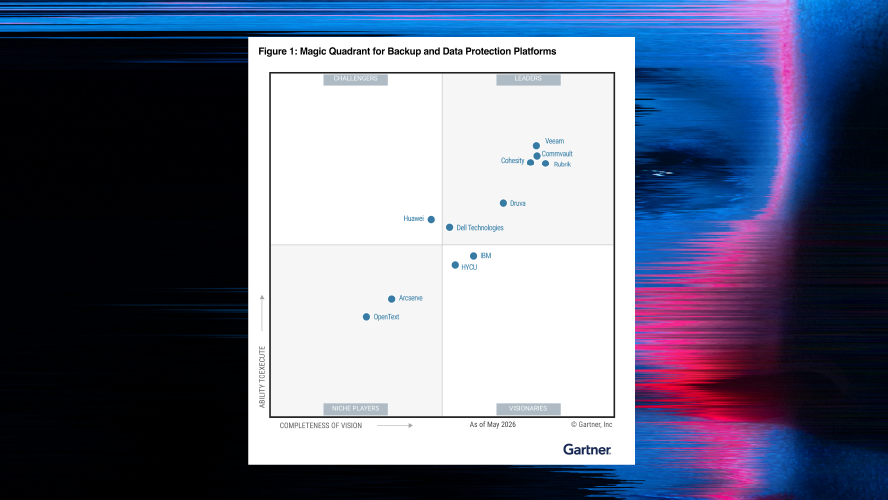
Quadrante Mágico Gartner®™

Beyond Disaster Recovery: Por que você precisa de uma estratégia diferente quando o ransomware ataca

A Organização com resiliência cibernética: Preparação máxima com recuperação à prova de balas
Recursos relacionados
Sala Limpa da Commvault
O Commvault Cleanroom é um processo especializado de recuperação de dados que garante a recuperação segura e confiável de informações críticas a partir de dispositivos de armazenamento danificados em ambientes onde a contaminação de dados representa um risco significativo.
Sala Limpa da Commvault
O Commvault Cleanroom é um processo especializado de recuperação de dados que garante a recuperação segura e confiável de informações críticas a partir de dispositivos de armazenamento danificados em ambientes onde a contaminação de dados representa um risco significativo.
Backup como Serviço (BaaS)
As soluções de Backup como Serviço (BaaS) oferecem recursos de Backup and Recovery baseados em nuvem, sem a necessidade de hardware físico ou Appliances locais para hospedar e operar a infraestrutura de backup.
Backup como Serviço (BaaS)
As soluções de Backup como Serviço (BaaS) oferecem recursos de Backup and Recovery baseados em nuvem, sem a necessidade de hardware físico ou Appliances locais para hospedar e operar a infraestrutura de backup.
Recuperação de desastres
Recovery de desastres (DR) é o processo de restauração da infraestrutura de TI e das operações de uma organização após uma grande interrupção ou desastre. O objetivo da Recovery de desastres é minimizar o impacto de um evento disruptivo e restaurar as operações normais o mais rápido possível, a fim de minimizar o impacto nos processos de negócios e na reputação da organização.